[MEDIA:a_wide_professional_marketing_banner_graphic_de_1]
EICR Reports and Electrical Safety Certificates in Golders Green
If you own, manage or rent out a property in Golders Green, an Electrical Installation Condition Report is one of the most important documents for understanding the safety of your fixed wiring. A professional Electrician in London can inspect the installation, identify hidden risks and provide a clear report that helps you make safe, practical decisions before small electrical issues become expensive or dangerous.
An EICR is often called an electrical safety certificate, but it is more than a simple pass or fail document. It checks whether the wiring, consumer unit, protective devices, earthing, bonding, sockets, switches and fixed electrical points are safe for continued use. For landlords, it also supports legal compliance and helps protect tenants, property owners and managing agents.
Golders Green has a wide mix of property types, from converted flats and period houses to modern apartments, commercial units and rented HMOs. Each property can have different electrical risks. Older wiring, overloaded socket circuits, outdated fuse boxes, poor DIY work, damaged accessories and previous extensions can all affect the final EICR result.
EICR Safety Infographic
Use the infographic below to quickly understand what an EICR checks, who needs one, what the main report codes mean and why electrical safety certificates matter for Golders Green properties.
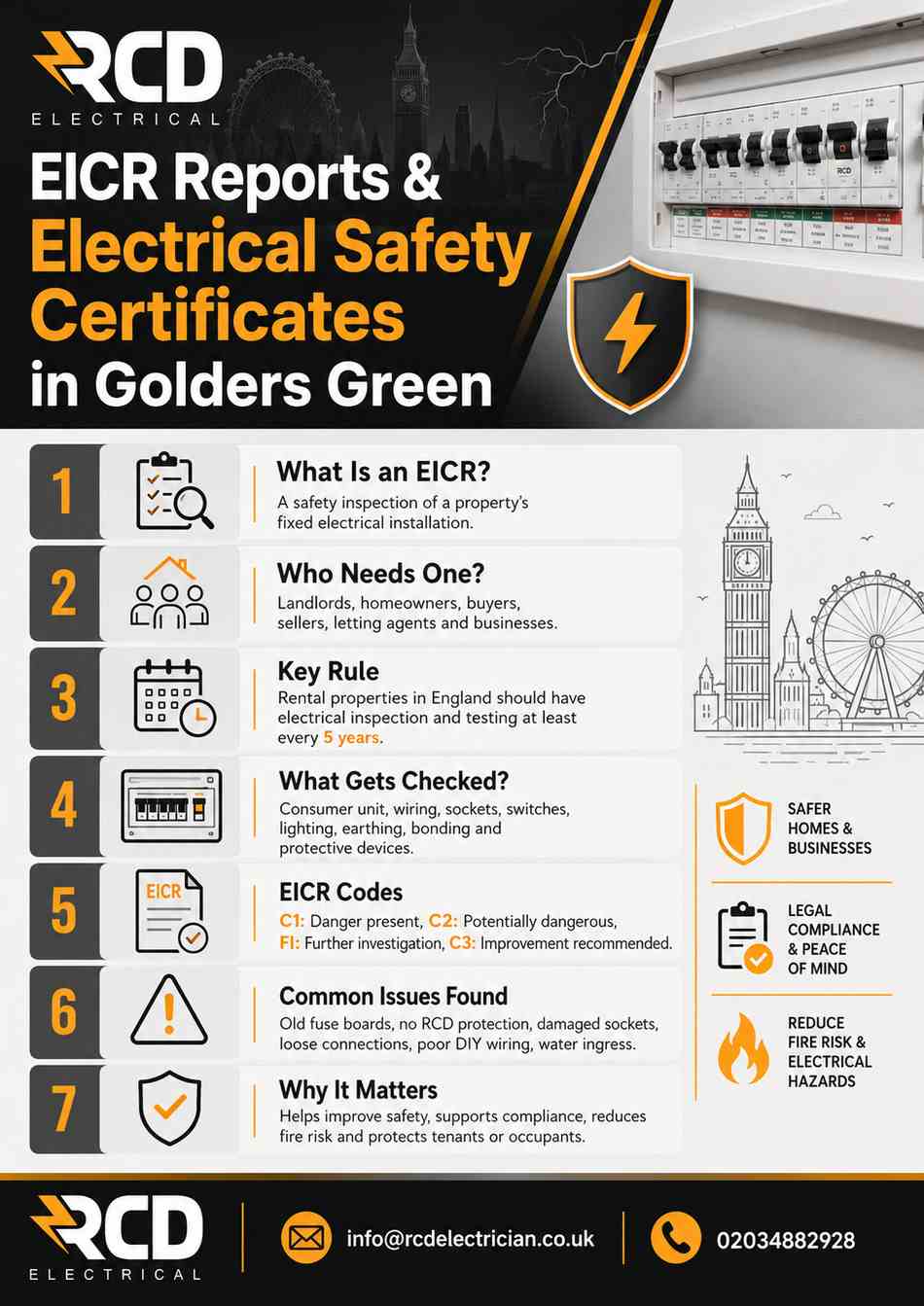 Click to view full infographic
What Is an EICR?
An EICR, or Electrical Installation Condition Report, is a formal inspection and test of a property’s fixed electrical installation. It looks at the parts of the electrical system that are normally built into the building, including cables, circuits, socket outlets, light points, switches, consumer units, earthing and bonding arrangements.
The purpose of the report is to decide whether the installation is safe for continued use. It can reveal immediate danger, potential danger, deterioration, poor previous work, overloaded circuits, lack of protection or parts of the installation that no longer meet modern safety expectations.
This matters because electrical systems often deteriorate quietly. A socket may still work even if the terminal behind it is loose. A light may switch on even if the cable insulation is damaged. A consumer unit may look tidy from the outside while having poor internal connections, missing labels or outdated protective devices.
A good EICR gives property owners clarity. It explains what has been inspected, what has been tested, what is satisfactory and what requires attention. It should also help you understand whether remedial work is urgent, recommended or only needed as an improvement.
Who Needs an Electrical Safety Certificate in Golders Green?
Landlords are the most common clients for EICR reports because rental properties in England require regular electrical safety checks. However, homeowners, buyers, sellers, commercial tenants, letting agents and property managers can also benefit from an inspection.
If you are buying a property in Golders Green, an EICR can help you understand the electrical condition before you commit to major renovation costs. If you are selling, it can provide reassurance to potential buyers. If you are planning a refurbishment, the report can show whether the existing installation is suitable for new appliances, lighting upgrades, kitchen work or additional sockets.
- Private landlords preparing for a new tenancy
- Letting agents managing compliance documents
- Homeowners concerned about old wiring
- Buyers checking a property before purchase
- Businesses reviewing workplace electrical safety
- Property managers handling blocks or converted flats
- Homeowners planning renovation work
- Tenants reporting repeated electrical problems
An EICR is especially useful if the property has an old fuse box, frequent tripping, warm sockets, flickering lights, burning smells, previous DIY electrical work or no clear inspection history.
Landlord EICR Rules in England
For most rented homes in England, landlords must make sure the electrical installation is inspected and tested by a qualified person at least every five years. They must also obtain a report and provide it to tenants and, where requested, to the local authority.
This is why an EICR is not just a technical document. It is part of responsible property management. A valid report helps show that the landlord has taken electrical safety seriously and has arranged professional testing within the required timescale.
If the report identifies dangerous or potentially dangerous defects, the landlord should arrange suitable remedial work within the required timeframe. Ignoring an unsatisfactory EICR can create legal, insurance and safety problems, especially if a tenant reports an issue or the local council asks for evidence.
For landlords in Golders Green, it is sensible to keep a digital and printed copy of the EICR, any remedial certificates, invoices and communication with tenants or agents. This creates a clear compliance trail and helps avoid confusion when tenancies change.
What Happens During an EICR Inspection?
During an EICR, the electrician carries out a combination of visual checks and electrical testing. The inspection normally begins at the consumer unit, where the electrician reviews circuit identification, protective devices, RCD protection, signs of heat damage, accessibility and general condition.
The electrician then checks a sample of accessories and circuits throughout the property. This may include sockets, switches, lighting points, cooker circuits, shower circuits, outside power, smoke alarm supplies and other fixed electrical equipment. The exact scope depends on the property type and accessibility.
Testing may include continuity, insulation resistance, polarity, earth fault loop impedance and RCD testing. These tests help reveal hidden faults that cannot be confirmed by looking alone. For example, a circuit may appear visually acceptable but fail insulation resistance testing because a cable is damaged or moisture is present.
- Consumer unit condition and labelling
- Earthing and bonding arrangements
- Socket and lighting circuit safety
- RCD and protective device operation
- Signs of overheating or damage
- Condition of fixed wiring and accessories
- Suitability of circuits for continued use
- Any urgent electrical safety concerns
The power may need to be turned off during parts of the inspection, so it is best to plan the visit at a time when the property can be accessed safely and occupants are aware of the process.
Understanding EICR Codes: C1, C2, C3 and FI
One of the most useful parts of an EICR is the coding system. The electrician records observations and gives each issue a code based on its level of risk. Understanding these codes helps you know what action is required and how urgent the problem is.
| Code |
Meaning |
Typical Action |
| C1 |
Danger present |
Immediate action required to make the installation safe |
| C2 |
Potentially dangerous |
Urgent remedial work is normally required |
| FI |
Further investigation required |
The electrician needs more investigation before safety can be confirmed |
| C3 |
Improvement recommended |
Not usually urgent, but improvement is advised |
A report with C1, C2 or FI observations is usually classed as unsatisfactory until the required investigation or remedial work has been completed. A C3 observation does not usually make the report unsatisfactory on its own, but it highlights areas where the installation could be improved.
Clear explanations matter. A professional electrician should explain the codes in plain English, show what the problem means and recommend a sensible repair route rather than leaving the property owner confused by technical language.
Common Electrical Problems Found in Golders Green Properties
Golders Green includes many older buildings, converted properties and rental homes. These types of properties often have electrical systems that have been altered over time. Extensions, loft conversions, new kitchens, extra sockets and replacement consumer units may all have been added by different contractors over different years.
Common EICR findings include missing circuit labels, lack of RCD protection, damaged sockets, loose connections, exposed conductors, poor earthing, inadequate bonding, overloaded circuits, ageing cable insulation and unsafe outdoor electrics. In converted flats, shared supplies and unclear circuit arrangements can also create complications.
- Outdated consumer units or fuse boxes
- No RCD protection on vulnerable circuits
- Damaged socket fronts or loose accessories
- Poor DIY wiring or unsafe additions
- Missing main protective bonding
- Heat damage inside switches or sockets
- Old lighting circuits without CPC
- Water ingress in outdoor fittings
These problems are not always visible during everyday use. That is why a structured inspection is valuable. It helps separate minor improvements from genuine safety risks and allows the owner to prioritise work properly.
How to Prepare for an EICR Visit
Good preparation can make the EICR smoother, quicker and more accurate. The electrician will need access to the consumer unit, sockets, switches, light fittings and relevant electrical points. If furniture blocks key sockets or cupboards hide electrical equipment, the inspection may be limited.
Before the appointment, let occupants know that power may be switched off for testing. Save work on computers, avoid running important appliances and make sure alarms, heating controls or medical equipment are considered before the inspection starts.
- Clear access to the consumer unit
- Move furniture away from main socket areas
- Provide previous reports if available
- Share known issues such as tripping or flickering
- Make sure keys are available for all rooms
- Inform tenants about possible power interruptions
- Keep pets safely away from work areas
- Point out outdoor sockets or external lighting
If the property has had recent building work, kitchen upgrades, bathroom changes or electrical additions, tell the electrician. This information can help them focus on areas where faults or non-compliant work are more likely.
What Happens After You Receive the EICR?
After the inspection, you should receive a written report showing the outcome. If the installation is satisfactory, the report confirms that no urgent coded defects were found at the time of inspection. You should keep this document safe and note the recommended next inspection date.
If the report is unsatisfactory, do not panic. It means the electrician has found one or more issues that need action. The next step is to review the observations, understand the risk level and arrange suitable remedial work or further investigation.
For landlords, remedial work should be handled promptly and properly documented. Once the required work has been completed, you may need written confirmation, a minor works certificate, an electrical installation certificate or other evidence depending on the nature of the repair.
Many property owners also use the EICR as a planning tool. Even if only C3 improvements are found, the report can help you budget for future upgrades such as a modern consumer unit, improved RCD protection, replacement accessories or better outdoor electrical safety.
Choosing the Right Electrician for an EICR in Golders Green
An EICR should be carried out by a competent and qualified electrician with suitable testing equipment, experience and knowledge of current wiring standards. It should not be treated as a quick paperwork exercise. A rushed or poorly completed report can miss important safety issues and create problems for landlords, tenants and property owners.
Look for an electrician who explains the process clearly, provides transparent pricing, arrives with proper test instruments and gives a detailed written report. Good communication is especially important for landlords and managing agents who may need to explain findings to tenants or arrange remedial work quickly.
It is also useful to choose a company that can handle both inspection and repair. If the EICR identifies a fault, damaged accessory, bonding issue or consumer unit problem, using the same team for remedial work can save time and reduce confusion.
Alongside EICR testing, RCD Electrical can help with ELECTRICAL SERVICES IN LONDON, including fault finding, electrical repairs, consumer unit checks, rewiring advice, installation work and emergency support for homes, landlords and businesses.
Final Safety Advice for Golders Green Property Owners
Electrical safety is not something to leave until a problem becomes obvious. Repeated tripping, warm sockets, flickering lights, buzzing sounds, burning smells or damaged accessories should always be taken seriously. These signs can indicate loose connections, overloaded circuits, failing equipment or wiring faults hidden behind walls and fittings.
An EICR gives you a clearer picture of the installation and helps you decide what needs attention now, what can be improved later and what is already safe for continued use. For landlords, it also supports compliance and gives tenants confidence that the property has been professionally checked.
Whether you manage a rented flat, live in an older Golders Green house or are preparing a property for sale, a professional inspection can prevent unnecessary risk and help you plan the right electrical improvements. For reliable testing, clear reporting and practical remedial support, contact trusted London Electricians who understand local properties and UK electrical safety requirements.
Need an EICR Report in Golders Green?
RCD Electrical can help with electrical safety certificates, EICR inspections, fault finding, remedial work and professional electrical testing for homes, landlords, letting agents and businesses across London.
Book a qualified electrician today and keep your Golders Green property safe, compliant and ready for continued use.