Electrical faults can feel worrying, especially when lights flicker, sockets stop working, a breaker keeps tripping or you notice heat, buzzing or a burning smell near an electrical point. For homeowners in London, the safest first step is to understand the warning signs and then contact a qualified Electrician in London before a small issue becomes a serious safety risk.
Electrical fault finding is not guesswork. A reliable diagnosis requires safe isolation, correct testing equipment, knowledge of UK wiring systems and experience with domestic circuits. A fault may be visible on a socket faceplate, but it may also be hidden behind a switch, inside a junction box, within a consumer unit, under flooring or in an outdoor cable affected by moisture.
This practical guide explains what electrical fault finding means, the common signs homeowners should never ignore, how electricians diagnose faults and when you should stop using a circuit and arrange professional help.
Electrical Fault Finding Explained for Homeowners
View the infographic below for a clear visual summary of common warning signs, safe first steps, professional testing and when to call an electrician.
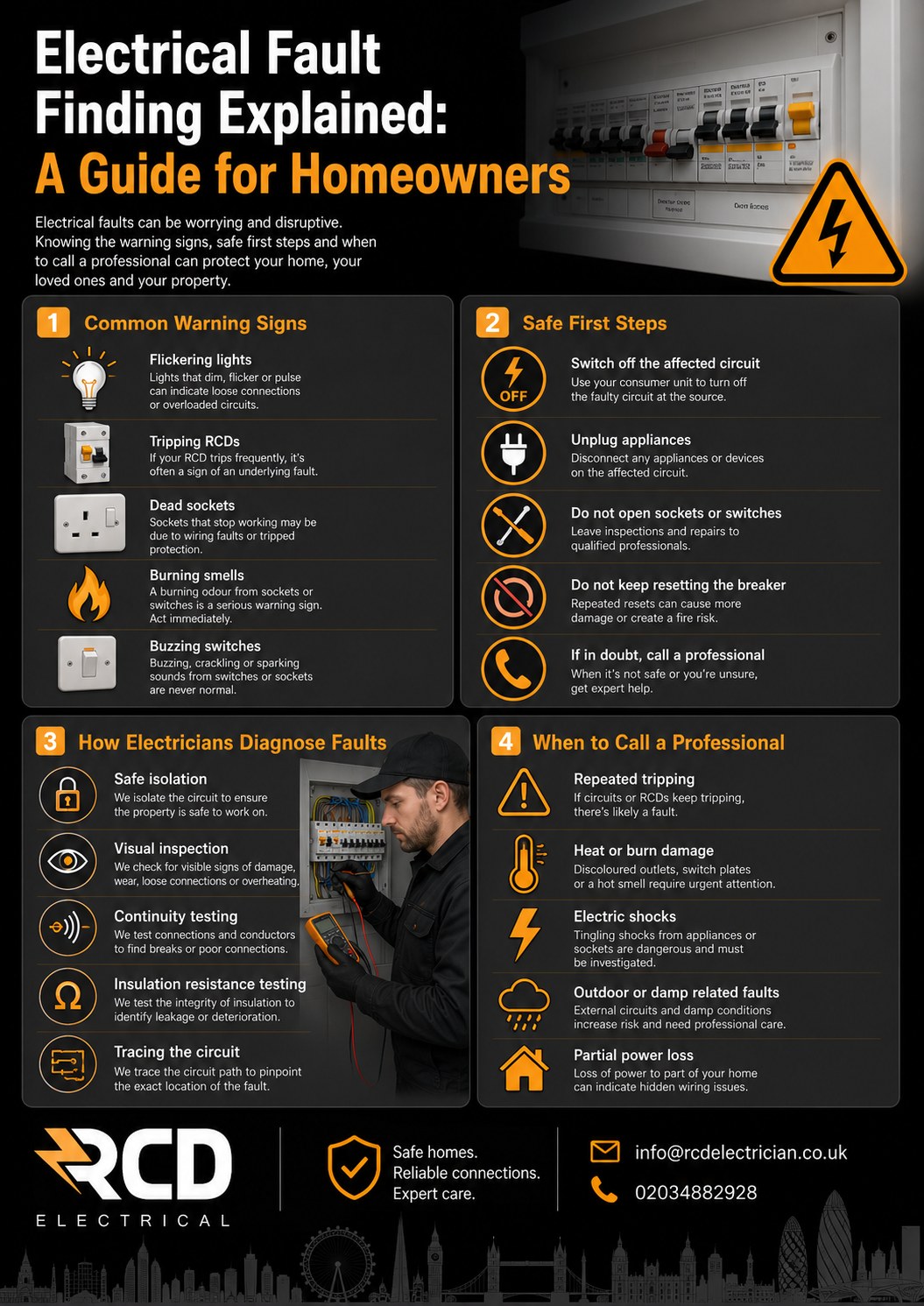 Click to view full infographic
Click the image to view the full electrical fault finding infographic.
Watch: EICR Testing and Electrical Fault Finding in London
This video section is fully responsive for desktop and mobile. It is limited in width on larger screens so it does not overpower the article layout.
What Is Electrical Fault Finding?
Electrical fault finding is the process of identifying why part of an electrical installation is not working safely or correctly. The issue may involve a lighting circuit, socket circuit, cooker circuit, outdoor supply, appliance connection, consumer unit or protective device such as an RCD or RCBO.
In a healthy circuit, electricity flows through the correct conductors, protective devices remain stable and accessories operate without heat, arcing, buzzing or repeated tripping. When a fault develops, the circuit may become unstable or unsafe. Sometimes the result is obvious, such as a socket that no longer works. In other cases, the only sign may be an intermittent trip that happens once every few days.
- Short circuits between live conductors
- Earth leakage faults causing RCD tripping
- Loose terminals inside sockets or switches
- Damaged cable insulation
- Moisture inside outdoor fittings
- Overloaded or poorly designed circuits
- Broken conductors or open circuits
- Faulty appliances affecting the circuit
Professional Electrical Fault Finding London services help locate the real cause instead of simply resetting a breaker or replacing parts without evidence.
Common Warning Signs of an Electrical Fault
Electrical faults often provide warning signs before they become more serious. A single flicker may not always mean there is a major problem, but repeated symptoms should be investigated, particularly when they affect the same room, circuit or appliance.
One of the most common signs is repeated tripping. If an RCD, RCBO or circuit breaker keeps switching off, the protective device may be responding to leakage, overload, a damaged cable, water ingress or a faulty appliance. Resetting it repeatedly without investigation can mask the problem and may increase the risk of heat damage.
- Lights flickering, dimming or failing suddenly
- Breakers or RCDs tripping again and again
- Sockets, switches or plugs feeling warm
- Buzzing, crackling or arcing sounds
- Burning smells near electrical accessories
- Scorch marks or discoloured faceplates
- Partial power loss in one room or area
- Appliances cutting out or causing trips
If you notice smoke, sparks, strong heat, a burning smell or exposed wiring, stop using the affected circuit and arrange urgent help. These symptoms should not be treated as normal household inconvenience.
Why Electrical Faults Should Not Be Ignored
A fault that appears minor can point to a deeper issue within the installation. Loose connections can generate heat, damaged insulation can allow current to leak, and moisture inside external fittings can cause intermittent tripping that becomes worse during wet weather.
Some faults are frustrating rather than immediately obvious. For example, a circuit may trip only when several appliances are used at the same time, or only when a particular garden light, boiler control or kitchen appliance is switched on. This can lead homeowners to believe the issue has gone away, when in reality the fault is still present but intermittent.
Ignoring warning signs may also lead to wider disruption. A small lighting fault can affect several rooms, a socket circuit problem can interrupt home working, and a consumer unit issue can leave essential equipment without power. A structured fault-finding visit helps reduce risk, limit damage and restore confidence in the installation.
How Electricians Diagnose Electrical Faults
A qualified electrician starts by asking about the symptoms. When did the fault begin? Does it happen constantly or occasionally? Was any appliance, outdoor light, shower, cooker, boiler or extension lead in use at the time? Has there been recent drilling, decorating, water damage or building work?
The next stage is safe isolation. The correct circuit must be switched off and proved dead using suitable test equipment before accessories are removed or wiring is inspected. This is important because some older properties have altered circuits or poor labelling at the consumer unit.
After isolation, the electrician may carry out visual inspection, continuity testing, insulation resistance testing, polarity checks, earth fault loop impedance testing and RCD testing where appropriate. The aim is to collect evidence, narrow the fault area and avoid unnecessary replacement of parts.
| Diagnostic Stage |
What It Helps Identify |
Typical Example |
| Visual inspection |
Heat damage, loose accessories or moisture |
Scorched socket or water-damaged outdoor light |
| Continuity testing |
Broken conductors or poor connections |
Part of a socket circuit not working |
| Insulation testing |
Current leakage or damaged insulation |
RCD tripping with no obvious cause |
| Circuit tracing |
The exact section causing the issue |
Fault between two accessories |
| Final testing |
Safety after repair |
Confirming the circuit is stable before use |
RCDs, Breakers and Tripping Circuits Explained
Many homeowners describe every electrical trip as a fuse board problem, but different protective devices respond to different conditions. A circuit breaker may trip because of overload or a short circuit. An RCD or RCBO may trip because current is leaking to earth. This is why identifying the exact device that has switched off is an important part of diagnosis.
If the RCD trips immediately when a circuit is turned back on, the fault may be present even with appliances unplugged. If it trips only when a particular appliance is used, that appliance or its local socket may need attention. If the problem appears after rain, outdoor wiring, garden lighting or external sockets may be involved.
A professional electrician will separate the installation into logical sections and test each part. This method avoids guesswork and helps locate faults hidden behind walls, under floors or inside accessories.
Safe Checks Homeowners Can Do Before Calling
There are a few basic checks homeowners can do safely without opening electrical accessories. You can check whether neighbours still have power, look at the consumer unit to see which switch has tripped, unplug portable appliances from the affected circuit and avoid using any accessory that smells hot, looks damaged or feels warm.
You should not remove socket fronts, open switches, remove consumer unit covers or touch exposed wiring. You should also avoid repeatedly resetting a breaker if it trips immediately. Protective devices are designed to operate when something is wrong, so repeated tripping should be treated as a sign that the circuit needs testing.
- Unplug appliances from the affected circuit
- Check whether the same device keeps tripping
- Avoid using warm or discoloured accessories
- Keep water away from electrical points
- Do not open sockets or switches yourself
- Do not remove the consumer unit cover
- Make a note of when the fault happens
- Call an electrician if the issue repeats
These checks can help explain the symptoms, but they are not a substitute for proper electrical testing.
Repair, Retest and Prevention
Finding the fault is only the first stage. Once the cause is identified, the circuit must be repaired correctly and tested again before normal use. The repair may involve replacing a damaged socket, tightening a loose terminal, removing water-damaged fittings, repairing a cable, disconnecting a faulty appliance or upgrading unsafe wiring.
After the repair, the electrician should confirm that the circuit is safe and stable. Functional testing is also important: lights should operate correctly, sockets should provide power, appliances should not cause tripping and the protective device should remain on during normal use.
Prevention is also part of good electrical care. Avoid overloading sockets, do not rely permanently on extension leads, repair damaged accessories promptly, keep outdoor electrical equipment protected from water and arrange periodic inspection where appropriate. If your property has older wiring, an outdated consumer unit or signs of previous DIY electrical work, a wider electrical inspection may be sensible.
Electrical Faults in Landlord Properties and Older Homes
Fault finding is particularly important in rented homes, older London properties and houses that have been extended or renovated over time. Circuits may have been altered, accessories may have been added, and old wiring may be mixed with newer installation work.
For landlords, electrical safety is not only about restoring power. It is also about protecting tenants, keeping records and dealing with faults properly. A recurring electrical problem in a rental property should be investigated rather than temporarily reset or ignored.
Older homes may also have consumer units without modern protection, ageing cable insulation, overloaded socket layouts or hidden junction boxes. These issues do not always mean a full rewire is needed, but they do mean faults should be diagnosed carefully and professionally.
When Should You Call RCD Electrical?
You should call a professional electrician if you have repeated tripping, burning smells, buzzing sounds, warm sockets, scorch marks, electric shocks, exposed wiring, partial power loss or any electrical issue that makes you unsure about safety.
RCD Electrical provides professional ELECTRICAL SERVICES IN LONDON, including fault finding, testing, inspection, repairs, consumer unit checks and support for domestic and small commercial properties. A proper fault-finding visit helps identify the cause clearly and recommend the most practical repair.
Whether the problem is a tripping RCD, dead sockets, flickering lights, an outdoor circuit fault or an appliance connection issue, a structured diagnostic approach helps protect the property and reduce the chance of the problem returning.
Final Advice for London Homeowners
Electrical fault finding is about more than getting the power back on. It is about understanding why the fault happened, repairing it safely and confirming that the circuit is suitable for continued use. A quick reset may temporarily restore power, but it does not prove that the installation is safe.
If a fault appears repeatedly, affects the same circuit, involves heat or smells, or happens around outdoor electrics, it is better to arrange testing sooner rather than later. Acting early can prevent further damage, reduce disruption and help keep your home safe.
For homeowners, landlords and businesses looking for safe diagnosis and reliable repairs, experienced London Electricians can help locate the cause, explain the issue clearly and restore your electrical system with confidence.
Need Help With an Electrical Fault?
If your lights are flickering, sockets have stopped working, your RCD keeps tripping or you are worried about a burning smell, RCD Electrical can help.
Contact RCD Electrical for professional electrical fault finding, testing and safe repairs across London.